Your How do dams make electricity images are ready. How do dams make electricity are a topic that is being searched for and liked by netizens now. You can Get the How do dams make electricity files here. Get all royalty-free vectors.
If you’re searching for how do dams make electricity images information related to the how do dams make electricity interest, you have visit the right site. Our site always provides you with hints for downloading the highest quality video and picture content, please kindly search and find more enlightening video content and images that match your interests.
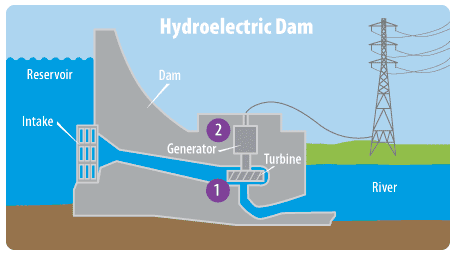
How Do Dams Make Electricity. Turning the Hydroelectric Turbine. Dams make energy by directing the flow of water past turbines causing them to spin. The spinning turbine is attached to wires and magnets. First the dam restricts the flow of water from one end of the dam to the other concentrating the water and making it so that the water flowing through the dam has a higher velocity.
 Alternatif Enerji Muhendislik Elektrik From pinterest.com
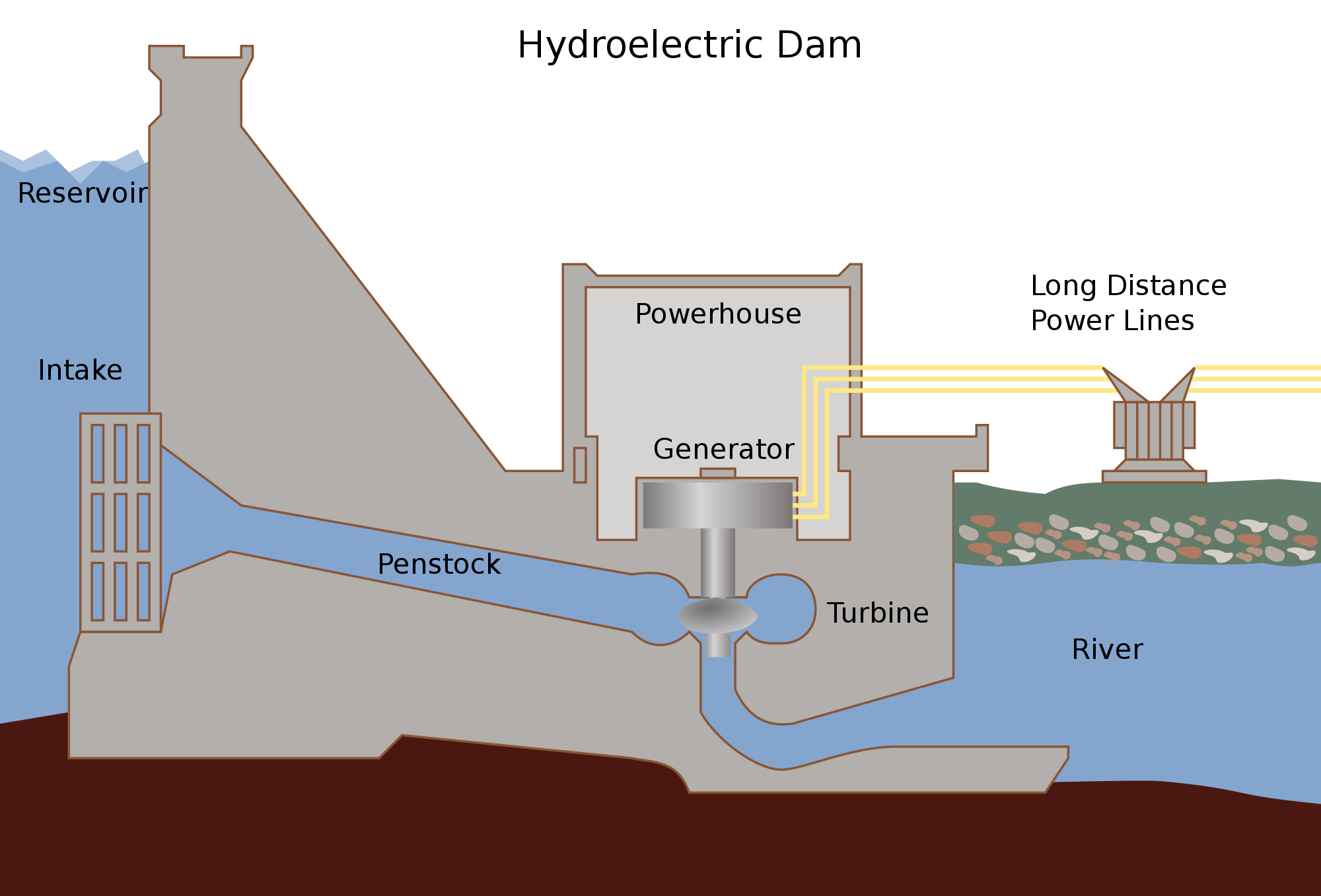
When water from the dam passes through the turbines spin. If playback doesnt begin shortly try restarting your device. Of course the type size and quantity of turbinesgenerators vary considerably. Animation explaining how electricity is produced using a hydroelectric facility. Hydroelectric power plants are usually located in dams that impound rivers thereby raising the level of the water behind the dam and creating as high a head as is feasibleThen during periods of peak demand the water is allowed to flow down again through the turbine to generate electrical energy. Water released from the reservoir flows through a turbine spinning it which in turn activates a generator to produce electricity.
Water released from the reservoir flows through a turbine spinning it which in turn activates a generator to produce electricity.
Can a dam generate a power if the amount of water is low. How do dams make hydroelectric power. Dams are typically constructed on large rivers that. The spinning turbine is attached to wires and magnets. The dam stores lots of water behind it in the reservoir. How do dams make electricity.
 Source: pinterest.com
How Do Hydroelectric Dams Generate Electricity. Hydroelectric dams exploit storage of gravitational potential energy. Gravity causes it to fall through. Water released from the reservoir flows through a turbine spinning it which in turn activates a generator to produce electricity. The result will be in Joules if the input is expressed in meters kilograms and seconds MKS or SI units.
 Source: pinterest.com
The theory is to build a dam on a large river that has a large drop in elevation there are not many hydroelectric plants in Kansas or Florida. Near the bottom of the dam wall there is the water intake. Dams make energy by directing the flow of water past turbines causing them to spin. A mass m raised a height h against gravity g 10 ms² is given a potential energy E mgh. Hydroelectric power plants are usually located in dams that impound rivers thereby raising the level of the water behind the dam and creating as high a head as is feasibleThen during periods of peak demand the water is allowed to flow down again through the turbine to generate electrical energy.
 Source: quora.com
The water flows through a. The water from the reservoir is allowed to flow over the dam in a controlled way. The generator converts the turbines mechanical energy into electricity. The more water that passes through a dam the more energy is produced. Hydroelectric dams are a very common form of hydroelectric generation used today and usually consists of large turbines that require a high volume of water flow.
 Source: tr.pinterest.com
A roaring river releases potential energy in the form of kinetic energy and. Large high-head dams can produce more power at lower costs than low-head dams but construction of large dams may be limited by lack of suitable sites by environmental considerations or by economic conditions. The more water that passes through a dam the more energy is. How do water dams generate electricity. The theory is to build a dam on a large river that has a large drop in elevation there are not many hydroelectric plants in Kansas or Florida.
Source: pinterest.com
Large high-head dams can produce more power at lower costs than low-head dams but construction of large dams may be limited by lack of suitable sites by environmental considerations or by economic conditions. A hydroelectric dam converts the potential energy stored in a water reservoir behind a dam to mechanical energymechanical energy is also known as kinetic energy. How do dams make hydroelectric power. Can a dam generate a power if the amount of water is low. Hydroelectric power plants are usually located in dams that impound rivers thereby raising the level of the water behind the dam and creating as high a head as is feasibleThen during periods of peak demand the water is allowed to flow down again through the turbine to generate electrical energy.
 Source: pinterest.com
The dam stores lots of water behind it in the reservoir. When water from the dam passes through the turbines spin. Gravity causes it to fall through the penstock inside the dam. Gravity causes it to fall through. Hydroelectric power plants are usually located in dams that impound rivers thereby raising the level of the water behind the dam and creating as high a head as is feasibleThen during periods of peak demand the water is allowed to flow down again through the turbine to generate electrical energy.
 Source: pinterest.com
The water flows through a. As the water falls it turns turbines and generates electricity. The spinning turbine is attached to wires and magnets. Hydroelectric power plants are usually located in dams that impound rivers thereby raising the level of the water behind the dam and creating as high a head as is feasibleThen during periods of peak demand the water is allowed to flow down again through the turbine to generate electrical energy. Hydroelectric dams exploit storage of gravitational potential energy.
 Source: pinterest.com
A mass m raised a height h against gravity g 10 ms² is given a potential energy E mgh. As the water flows down through the dam its kinetic energy is used to turn a turbine. How do water dams generate electricity. How do dams make electricity. When water from the dam passes through the turbines spin.
 Source: pinterest.com
How do dams make hydroelectric power. Typically a river is blocked by a dam to create a large reservoir of water. Hydroelectric power plants are usually located in dams that impound rivers thereby raising the level of the water behind the dam and creating as high a head as is feasibleThen during periods of peak demand the water is allowed to flow down again through the turbine to generate electrical energy. A low-head dam is one with a water drop of less than 65 feet and a generating capacity less than 15000 kW. Gravity causes it to fall through.
 Source: archive.epa.gov
A low-head dam is one with a water drop of less than 65 feet and a generating capacity less than 15000 kW. The spinning turbine is attached to wires and magnets. How do dams work. Of course the type size and quantity of turbinesgenerators vary considerably. These are electric turbines inside a dam.
 Source: pinterest.com
What are the advantages of dams. The dam stores lots of water behind it in the reservoir. The most common type of hydroelectric power plant uses a dam on a river to store water in a reservoir. Dams make energy by directing the flow of water past turbines causing them to spin. If playback doesnt begin shortly try restarting your device.
 Source: pinterest.com
Hydroelectric power plants are usually located in dams that impound rivers thereby raising the level of the water behind the dam and creating as high a head as is feasibleThen during periods of peak demand the water is allowed to flow down again through the turbine to generate electrical energy. How a dam generates electricity. What are the advantages of dams. Dams are typically constructed on large rivers that. The dam stores lots of water behind it in the reservoir.
 Source: pinterest.com
The result will be in Joules if the input is expressed in meters kilograms and seconds MKS or SI units. A mass m raised a height h against gravity g 10 ms² is given a potential energy E mgh. The dam stores lots of water behind it in the reservoir. When the magnets move in relation to the wires it induces. The theory is to build a dam on a large river that has a large drop in elevation there are not many hydroelectric plants in Kansas or Florida.
 Source: pinterest.com
How Do Hydroelectric Dams Generate Electricity. A low-head dam is one with a water drop of less than 65 feet and a generating capacity less than 15000 kW. The most common type of hydroelectric power plant uses a dam on a river to store water in a reservoir. At the end of the penstock there is a turbine propellor which is turned by the moving water. How do dams make electricity.
 Source: pinterest.com
A roaring river releases potential energy in the form of kinetic energy and. As the water falls it turns turbines and generates electricity. A hydroelectric dam converts the potential energy stored in a water reservoir behind a dam to mechanical energymechanical energy is also known as kinetic energy. Answer 1 of 12. Dams provide a range of economic environmental and social.
 Source: pinterest.com
Water released from the reservoir flows through a turbine spinning it which in turn activates a generator to produce electricity. Hydroelectric power is produced as water passes through a dam and into a river below. Hydroelectric dams produce electricity by using falling water to spin a turbine that is connected to a generator through a large metal shaft. How Do Hydroelectric Dams Generate Electricity. When water from the dam passes through the turbines spin.
 Source: fr.pinterest.com
The water flows through a. These are electric turbines inside a dam. Gravity causes it to fall through. Turning the Hydroelectric Turbine. The theory is to build a dam on a large river that has a large drop in elevation there are not many hydroelectric plants in Kansas or Florida.
 Source: energyeducation.ca
A low-head dam is one with a water drop of less than 65 feet and a generating capacity less than 15000 kW. Dams make energy by directing the flow of water past turbines causing them to spin. As the water falls it turns turbines and generates electricity. Dams provide a range of economic environmental and social. This is extremely simplified.
This site is an open community for users to do sharing their favorite wallpapers on the internet, all images or pictures in this website are for personal wallpaper use only, it is stricly prohibited to use this wallpaper for commercial purposes, if you are the author and find this image is shared without your permission, please kindly raise a DMCA report to Us.
If you find this site good, please support us by sharing this posts to your preference social media accounts like Facebook, Instagram and so on or you can also save this blog page with the title how do dams make electricity by using Ctrl + D for devices a laptop with a Windows operating system or Command + D for laptops with an Apple operating system. If you use a smartphone, you can also use the drawer menu of the browser you are using. Whether it’s a Windows, Mac, iOS or Android operating system, you will still be able to bookmark this website.


